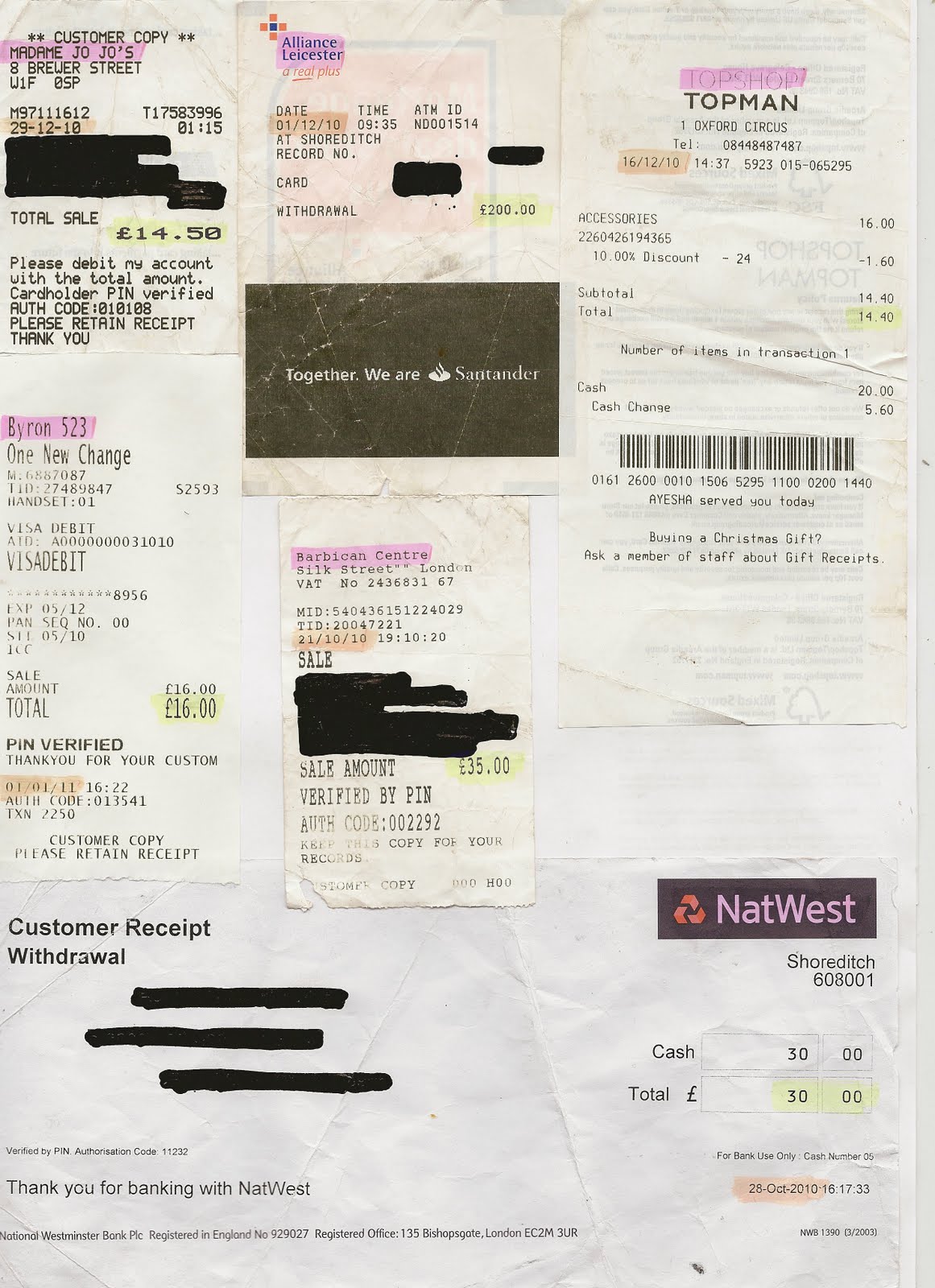
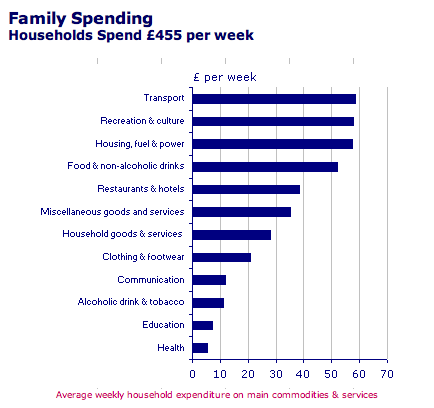
Receipt stickers printed on clear adhesive sheet, stuck onto the chart backing.
Does it have to be a tangible object?? Going back to the idea of the Excel spreadsheet, it could be an online app?


Receipts are legal documents that provide details about a transaction---sales, donation,
materials received or petty cash. The document can be used to track incoming revenue,
identify a return of materials, or keep track of inventory. Some businesses may have further
receipt requirements that include facility identification numbers, customer numbers,
and business tax numbers. Knowing federal, state and local government requirements
pertaining to taxes and identification before designing the receipt prevents the need
to re-design the document.
Decide what type of receipt is needed and how it will be used and printed.
Identify all the information needed for the particular receipt. For example, a sales receipt will need to indicate a date, the names of the parties making the transaction, the form of transaction (cash, credit card, store credit), the items being purchased, state, local and federal sales tax (if applicable), and a place to note the total amount of the transaction.
Identify all the different departments that will handle the receipt and ask what they need to see on the document.
Design the receipt using the information in Steps 1 through 3. Sketch the receipt design on paper before creating the document in a computer graphics program.
Include any other information that may be pertinent for the customer--return policy, available discounts and coupons, fees charged for restocking merchandise, and business identification numbers.
- Thermal paper - discolours in direct light and heat (fades over time)
- Most can only print in b&w
- All very similar - indistinguishable
- Quantity - excessive use of paper for a small quantity of information
- Thin - feel cheap and invaluable - readily discarded
- Easy to lose - diminishes probability of returning purchased object
PROOF OF PURCHASE - CONTRACT BETWEEN YOU AND SHOP
When you go shopping anything you buy is covered by a law called the Sale of Goods Act 1979. This means that when you buy a product it should be:
This means that the item you buy should be the same as any description of it. A description could be what the seller has said to you about the item or something written in a brochure.
What you buy should be able to do the job that it was made for. Also, goods should be fit for any specific purpose you agreed with the seller at the time of sale. For example, if you were looking to buy a printer and asked the seller if it would work with your computer then that advice has to be correct.
Goods that are of satisfactory quality are:
You can get your money back if an item is:
If you find that the item doesn’t meet these requirements you can ask for your money back, as long as you do so quickly. Alternatively, you can request a repair or replacement or claim compensation.
You do not have a right to a refund if you:
You don’t have to have a receipt to get a refund. However a seller can ask you to provide some proof of purchase. This could be a credit card bill or bank statement.
If you buy anything in a sale you are still covered by the Sale of Goods Act. You wouldn’t get a refund if:
First, ask the company to put things right - put your complaint in writing. If you are still not happy you may have to take the matter to court. Contact your local Citizens Advice Bureau for advice.
You can also get in touch with the local council’s Trading Standards office.